

Instant Downloads & A to Z’s Shop


Poems
Five Little Pilgrims
Five little Pilgrims on Thanksgiving Day
(hold up hand and count off fingers with the rhyme)
The first one said, “I”ll have cake if I may.”
The second one said, “I’ll have turkey roasted.”
The third one said, “I’ll have chestnuts toasted.”
The fourth one said, “I’ll have pumpkin pie.”
The fifth one said, “Oh, cranberries I spy.”
But before the Pilgrims ate their turkey dressing,
They bowed their heads and said a Thanksgiving blessing.”
Writing
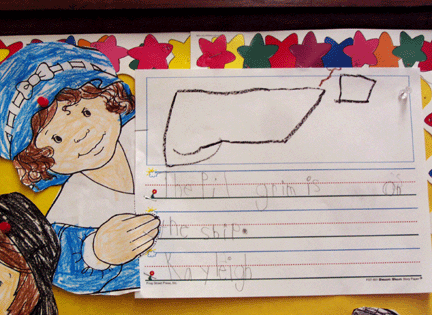
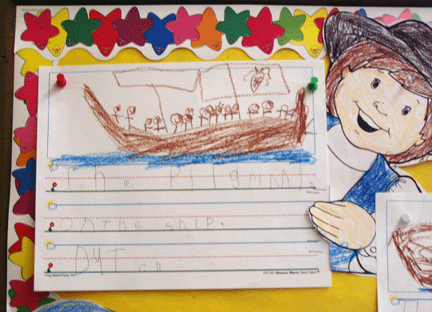
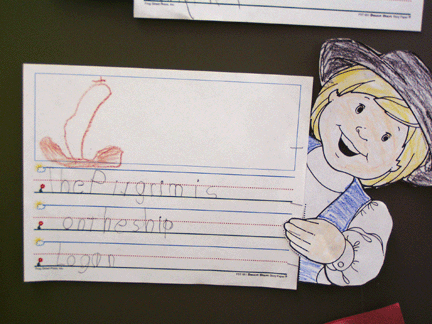
“The Pilgrim is on the ship.”
Booklets
This Little Pilgrim
Patterned sentences, “This little Pilgrim brought ____.”
November Monthly Reproducibles, Kindergarten, TEC963
The Pilgrims and Us
Points out the similarities between a Pilgrim family and a family of today, Worksheet Magazine, Kindergarten, Nov/Dec/Jan 1991-92
The Pilgrims Journey
Describes the Pilgrim’s voyage on the Mayflower
Teacher’s Helper, Kindergarten, Nov/Dec/Jan 1992-93
Social Studies
The Mayflower carried 128 people, as well as provisions and animals. To allow students to see how crowded the ship was, measure off an area 106 feet by 25 feet. Chalk off the area or lay a rope around the perimeter. Invite other classes to gather inside the area until there are 128 children inside. Remind them there would have also been provisions an then have them imagine living in this small amount of space for 66 days.
Brainstorm ideas of what the Pilgrims would have needed to take with them on the Mayflower. Send home a grocery bag and a note with each child asking that they pack the things they would need to take to a new land inside the bag. Have children share what they packed.
Make a Venn diagram to compare Pilgrim children’s chores to the chores of children today.
Make a Venn diagram to compare Pilgrim parents’ chores to the chores of children today.
Five Corn Kernels
History records that during the first hard winter, the Pilgrim’s daily ration of food plummeted to five kernels of parched corn daily. Show the children five popcorn kernels and we talk about how we might feel if that is all we have to eat! This is very impressive to the kids when you put the kernels on a regular size plate. Not much there!
Give the students either five kernels of deer feed corn or five candy corns in a baggie as you read this story.
The Legend of the Five Kernels
The first winter the Pilgrims spent in their new home was very cold. Food was in short supply. Some days they had only enough food for each new person to have five kernels of corn for the day. Finally spring came. They planted food and it grew. All the Pilgrims did not die. From then on, when a time of Thanksgiving came around, the Pilgrims put five kernels of corn on each plate to remind themselves of their blessings. Let us also remember:
The first kernel reminds us of the autumn beauty around us.
The second kernel reminds us of our love for each other.
The third kernel reminds us of God’s love and care for us.
The fourth kernel reminds us of our friends, especially our Native American brothers.
The fifth kernel reminds us that we are a free people.
After reading about the Five Corn Kernels and the Legend, give the children a small bag containing five pieces of candy corn attached to a note explaining the custom of giving thanks for five things before we eat Thanksgiving dinner in remembrance of those five corn kernels that were all the Pilgrims had to eat.
Art
Mayflower Ship
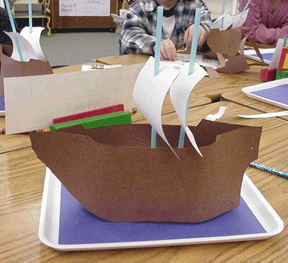
Wash out a school milk carton and lay it on its side.
Glue brown paper cut-outs of the Mayflower ship to each side. Use a pencil to poke one hole or two holes in the top side of the milk carton. Insert a straw or two and thread a white paper sail on to the the straw mast.
Girls Pilgrim Bonnet and Apron
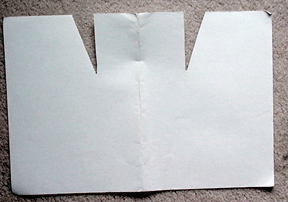
Make a Pilgrim hat (coif) for girls by copying the pattern below on 12 inches by 18 inches construction paper. Fold back about an inch on the long uncut side. Fold the two outer sections (where the slits are) over the middle to create a hat shape. Staple in place. Run yarn under the folded edge and tie.
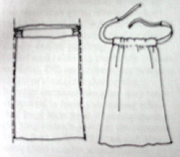
Then make an apron from drawstring kitchen trash bags (2 aprons from one bag). Cut the bag in half along the side seams. Pull the drawstring on both sides to gather the apron. (You may have to add ribbon to this.) Wrap it around the girl’s waist and tie in the back.
Pilgrim Boy Hat
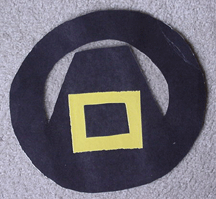
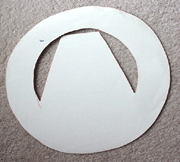
Cut out the shape below from 12″ x 18″ black construction paper. Glue on the yellow buckle. Put scotch tape at the corners and laminate for reinforcement.
Pilgrim Pocket
This was a drawstring bag that Pilgrims wore because their clothing did not have pockets. Punch holes along the top of a lunch bag and then turn the bag inside out. Thread a 36 inch length of yarn through the holes and tie in a bow. Wrap another length of yarn around the waist and tie on the pocket.
TLC Pilgrims
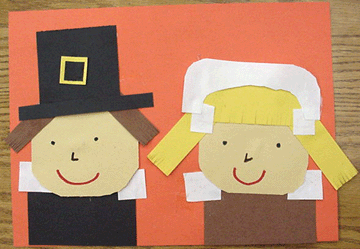
This art project is from the TLC Fall book.
Pilgrim Hat Favor
Buy black coffee cups and cut out the bottom. Cut a black construction paper circle with approximately a five inch diameter. Turn the cup upside down and glue to the center of the black circle. Add a gold buckle cutout to the hat. When the glue dries, fill with candy corn.
Pilgrim Log Cabin
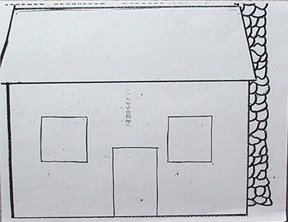
Color or paint the roof, windows and door. Glue pretzel sticks of pretzel logs on the house to make a log cabin.
Game
Pilgrim, Pilgrim where’s your hat?
(From nuttin’ but kids)
Have the children stand in a circle. Choose one child to be the pilgrim and stand in the middle. Blindfold this child. Let the other children in the circle pass the hat to each other saying:
Pilgrim, pilgrim where’s your hat?
We’ve passed it around the circle.
Now you try to get it back.
The children stop passing the hat when the poem is completed. The child who has the hat at this point hides it behind his back. The pilgrims tries to guess who has the hat.
Literature
Sarah Morton’s Day: A Day in the Life of a Pilgrim Girl by Kate Waters
Samuel Eaton’s Day: A Day in the Life of a Pilgrim Boy by Kate Waters
If You Sailed on the Mayflower in 1620 by Ann McGovern
Pilgrim Children on the Mayflower by Ida DeLage
Three Young Pilgrims by Cheryl Harness
Thanksgiving Day by Gail Gibbons
Squanto and The First Thanksgiving by Joyce Kessel
The Pilgrims’ First Thanksgiving by Ann McGovern
How Many Days to America?: A Thanksgiving Story by Eve Bunting
Related Posts:
 Thanksgiving and Turkey Math, Science, and Social Studies…
 Thanksgiving Bulletin Boards, Recipes, and Classroom Feast…
 Thanksgiving and Turkey Class Books and Literacy Activities
 Native American Indians Teaching Theme Ideas, Activities,…
 Thanksgiving Turkey Art Activities and Crafts
 Thanksgiving and Turkey Activities, Lessons, and Printables
