
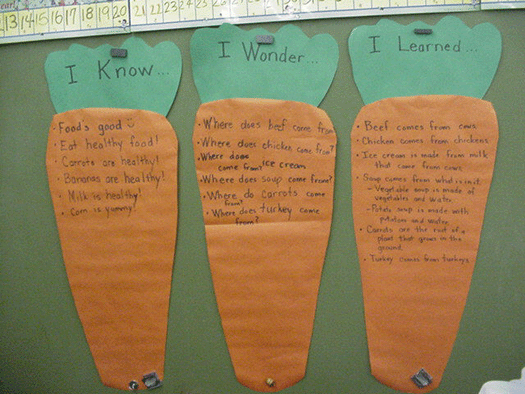
Begin the unit by filling in a KWL chart. Ask the students what they Know about food and what they Wonder about food. At the conclusion, fill in the “What I Learned” section.
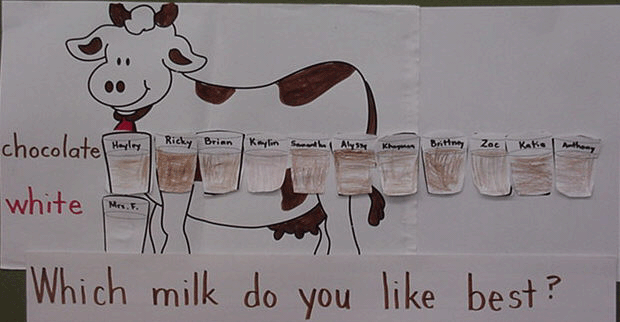
Taste test and then graph students’ favorite milk flavor. You could also make strawberry-flavored milk so they would have three choices.
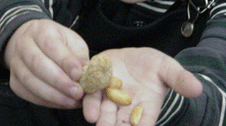
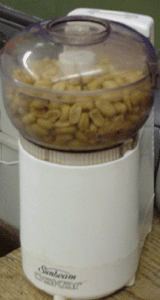
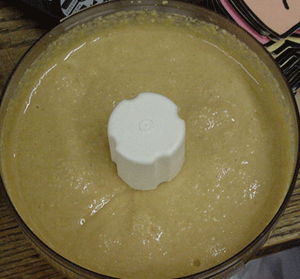
Make home-made peanut butter by combining peanuts and peanut oil in a food processor. First, let students use a magnifying glass to examine the small “plant” inside a peanut. The book, “From Peanuts to Peanut Butter”, by Melvin Berger is a great introduction for this lesson. You could also graph which peanut butter students like best–home-made or store bought.
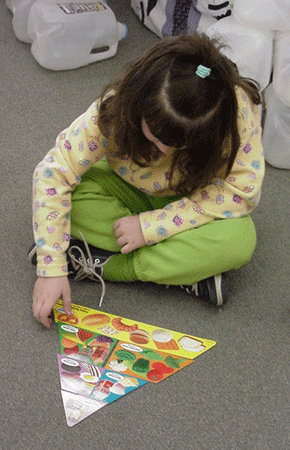
Assemble a food pyramid puzzle. If you don’t have one, make your own by cutting the shapes and having students bring in food pictures to glue to each section.
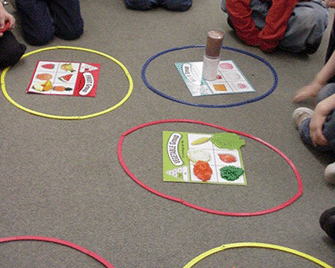
Sort play foods or food pictures into rings or hula hoops to categorize them by the groups on the Food Pyramid.
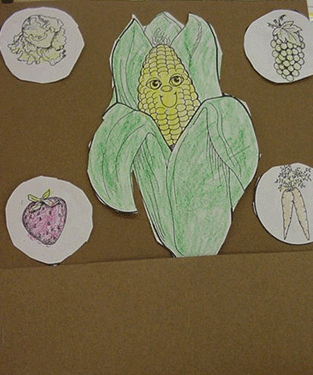
Have students make a book about the Food Pyramid. Each page has a pocket and some pictures glued to it to help students remember the groups. I copy some pages of food pictures and we cut some from magazines and the children sort them and put them in the correct pocket. An alternative would be to make this a class book or a learning center.
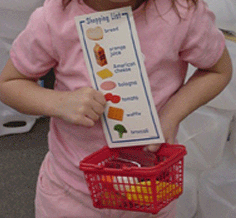
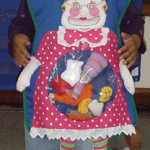
Make shopping lists and play grocery store.
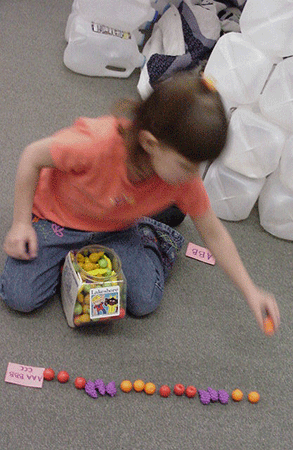
Use food manipulatives to make patterns at a math center. They could also be used to solve addition or subtraction story problems.
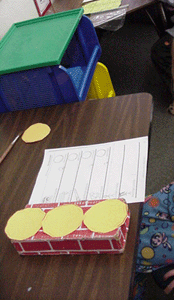
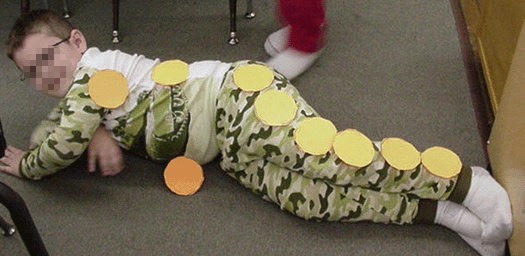
Use pancakes as a nonstandard measuring unit.